Saturday, 24 September 2016

Remote control

In consumer electronics, a remote control is a component of an electronic device such as a television set, DVD player, or other home appliance, used to operate the device wirelessly from a short distance. Remote control is a convenience feature[dubious ] for the consumer, and can allow operation of devices that are out of convenient reach for direct operation of controls.
Using remote control for home appliances is a great choice. They can be used to on and off the appliances like TV, AC, DVD player, motor etc with the help of our TV remote.
Commonly, remote controls are Consumer IR devices which sends digitally-coded pulses of infrared radiation to control functions such as power, volume, tuning, temperature set point, fan speed, or other features. Remote controls for these devices are usually small wireless handheld objects with an array of buttons for adjusting various settings such as television channel, track number, and volume. For many devices, the remote control contains all the function controls while the controlled device itself has only a handful of essential primary controls.
Earlier remote controls in 1973 used ultrasonic tones. The remote control code, and thus the required remote control device, is usually specific to a product line, but there are universal remotes, which emulate the remote control made for most major brand devices.
Remote control has continually evolved and advanced over recent years to include Bluetooth connectivity, motion sensor-enabled capabilities and voice control.

Industry

Remote control is used for controlling substations, pump storage power stations and HVDC-plants. For these systems often PLC-systems working in the longwave range are used.

Garage and Gate

Garage and gate remote control are very common, especially in some countries such as USA, Australia, and the UK, where garage doors, gates and barriers are widely used. Such a remote is very simple by design, usually only one button, and some with more buttons to control several gates from one control.
Such remotes can be divided into two categories by the encoder type used: fixed code and rolling code. If you find dip-switches in the remote, it is likely to be fixed code, an older technology which was widely used in the past. However, fixed code has been criticized for its (lack of) security, thus rolling code has been more and more widely used in today's newer installations.

Military

Remote controls in military usage employ jamming and countermeasures against jamming. Jammers are used to disable or sabotage the enemy's use of remote controls. The distances for military remote controls also tend to be much longer, up to intercontinental distance satellite linked remote controls used by the U.S. for their unmanned airplanes (drones) in Afghanistan, Iraq and Pakistan.
Remote controls are used by insurgents in Iraq and Afghanistan to attack coalition and government troops with roadside improvised explosive devices, and terrorists in Iraq are reported in the media to use modified TV remote controls to detonate bombs.[23]

Military history

In World War I, the Imperial German Navy employed FL-boats (Fernlenkboote) against coastal shipping. These were driven by internal combustion engines, and controlled remotely from a shore station through several miles of wire wound on a spool on the boat. An aircraft was used to signal directions to the shore station. EMBs carried a high explosive charge in the bow and traveled at speeds of thirty knots.[24]
The Soviet Red Army used remotely controlled teletanks during the 1930s in the Winter War against Finland and the early stages of World War II. A teletank is controlled by radio from a control tank at a distance of 500 to 1,500 meters, the two constituting a telemechanical group. The Red Army fielded at least two teletank battalions at the beginning of the Great Patriotic War. There were also remotely controlled cutters and experimental remotely controlled planes in the Red Army.

Space


Remote controlled free-flying television camera AERCam Sprint
Remote control technology is also used in space travel, for instance the Soviet Lunokhod vehicles were remote-controlled from the ground. Many space exploration rovers can be remotely controlled, though vast distance to a vehicle results in a long time delay between transmission and receipt of a command.

Video games


Video game consoles had not used wireless controllers until recently, mainly because of the difficulty involved in playing the game while keeping the infrared transmitter pointed at the console, or like the Wii whose remotes require line of sight to the infrared sensor bar. Early wireless controllers were cumbersome and when powered on alkaline batteries, lasted only a few hours before they needed replacement.
Some wireless controllers were produced by third parties, in most cases using a radio link instead of infrared. Even these were very inconsistent, and in some cases, had transmission delays, making them virtually useless. Some examples include the Double Player for NES, the Master System Remote Control System and the Wireless Dual Shot for the PlayStation.
The first official wireless game controller made by a first party manufacturer was the CX-42 for Atari 2600. The Philips CD-i 400 series also came with a remote control, the WaveBird was also produced for the GameCube. In the seventh generation of gaming consoles, wireless controllers became standard.
Some wireless controllers, such as those of the PlayStation 3, use Bluetooth. Others, like the Xbox 360, use proprietary wireless protocols.

PC control

Existing infrared remote controls can be used to control PC applications. Any application that supports shortcut keys can be controlled via IR remote controls from other home devices (TV, VCR, AC).[citation needed] This is widely used[citation needed] with multimedia applications for PC based home theatre systems. For this to work, one needs a device that decodes IR remote control data signals and a PC application that communicates to this device connected to PC. Connection can be made via serial port, USB port or motherboard IrDA connector. Such devices are commercially available but can be homemade using low-cost micro controllers.[citation needed]
LIRC (Linux IR Remote control) and WinLIRC (for Windows) are software packages developed for the purpose of controlling PC using TV remote and can be also used for homebrew remote with lesser modification.

Photography

Remote controls are used in photography, in particular to take long-exposure shots. Many action cameras such as the GoPros as well as standard DSLRs including Sony's Alpha series [26]incorporate Wi-Fi based remote control systems. These can often be accessed and even controlled via cell-phones and other mobile devices.

Friday, 23 September 2016

Radio


AM and FM Radio Frequencies

The Amplitude Modulated (AM radio) carrier frequencies are in the frequency range 535-1605 kHz. Carrier frequencies of 540 to 1600 kHz are assigned at 10 kHz intervals.
The FM radio band is from 88 to 108 MHz between VHF television Channels 6 and 7. The FM stations are assigned center frequencies at 200 kHz separation starting at 88.1 MHz, for a maximum of 100 stations. These FM stations have a 75 kHz maximum deviation from the center frequency, which leaves 25 kHz upper and lower "gaurd bands" to minimize interaction with the adjacent frequency band.
Electromagnetic spectrumRadio frequency bands


FM Stereo Broadcast Band

The bandwidth assigned to each FM station is sufficently wide to broadcast high-fidelity, stereo signals. The carrier frequency is directly modulated with the sum of the left and right channel audio signals. A 38 kHz subcarrier also modulates the carrier, and that subcarrier is modulated with the difference, L- R , of the audio signals. The FM tuner then decodes this signal and separates the Left and Right audio channels.
Radio frequency bandsFM bandFM radio


Heterodyne Principle

Heterodyning is a method for transferring a broadcast signal from its carrier to a fixed local intermediate frequency in the receiver so that most of the receiver does not have to be retuned when you change channels. The interference of any two waves will produce a beat frequency, and this technique provides for the tuning of a radio by forcing it to produce a specific beat frequency called the "intermediate frequency" or IF. Heterodyning is used in the AM radio receiver and played a big part in making AM radio practical for mass communication.
An electromagnetic carrier wave which is carrying a signal by means of amplitude modulation or frequency modulation can transfer that signal to a carrier of different frequency by means of heterodyning. This transfer is accomplished by mixing the original modulated carrier with a sine wave of another frequency. This process produces a beat frequency equal to the difference between the frequencies, and this difference frequency constitutes a third carrier which will be modulated by the original signal.
Heterodyning is extremely important in radio transmission -- in fact, the development of heterodyning schemes was one of the major developments which led to mass communication by radio. By fixing the beat frequency between the incoming carrier and the local oscillator to a fixed intermediate frequency (IF), most of a radio receiver can be constructed so that it can be used by any incoming radio signal. When the input radio frequency amplifier is tuned to the station's carrier frequency, the local oscillator is tuned along with it to produce a beat frequency equal to the fixed IF frequency. We now take for granted that one radio receiver can be tuned to any of the locally broadcast radio stations, but if it were not for heterodyning, you would have to have one receiver for each broadcast station.
Beat frequencies

 
RRadio Transmission

radio-receivers-chapter-02-6a


Transformer

Basic Theory of Transformer

Say you have one winding which is supplied by an alternating electrical source. The alternating current through the winding produces a continually changing flux or alternating flux that surrounds the winding. If any other winding is brought nearer to the previous one, obviously some portion of this flux will link with the second. As this flux is continually changing in its amplitude and direction, there must be a change in flux linkage in the second winding or coil. According to Faraday's law of electromagnetic induction, there must be an EMF induced in the second. If the circuit of the later winding is closed, there must be an current flowing through it. This is the simplest form of electrical power transformer and this is the most basic of working principle of transformer. For better understanding, we are trying to repeat the above explanation in a more brief way here. Whenever we apply alternating current to an electric coil, there will be an alternating flux surrounding that coil. Now if we bring another coil near the first one, there will be an alternating flux linkage with that second coil. As the flux is alternating, there will be obviously a rate of change in flux linkage with respect to time in the second coil. Naturally emf will be induced in it as per Faraday's law of electromagnetic induction. This is the most basic concept of the theory of transformer.
The winding which takes electrical power from the source, is generally known as primary winding of transformer. Here in our above example it is first winding. mutual induction The winding which gives the desired output voltage due to mutual induction in the transformer, is commonly known as secondary winding of transformer. Here in our example it is second winding. transformer core winding The above mentioned form of transformer is theoretically possible but not practically, because in open air very tiny portion of the flux of the first winding will link with second; so the current that flows through the closed circuit of later, will be so small in amount that it will be difficult to measure. The rate of change of flux linkage depends upon the amount of linked flux with the second winding. So, it is desired to be linked to almost all flux of primary winding to the secondary winding. This is effectively and efficiently done by placing one low reluctance path common to both of the winding. This low reluctance path is core of transformer, through which maximum number of flux produced by the primary is passed through and linked with the secondary winding. This is the most basic theory of transformer.
There is:
  • Step up transformer
  • Step down transformer
\

Solar Cell homemade


Solar panel flexible 
Transparency 12x20cm
Copper sheet foil
Doped silicon solvent
Fevicol
Rubbing alcohol 
Ear bud

Cut the copper strips 6x0.5cm
Clean the strips with alcohol 
Fold the transparency sheet into 12x10cm
Open the fold
Stick the strips alternately extending 
Attach the side strips
Apply doped silicon with ear bud in the gaps 
Close the cover
Solder wire to contacts 
Place in sunlight 
Test with multimeter
Gives up-to 3V

Pattern 
   |------------------------    |
   |   -------------------------|
   |-------------------------   |
   |   -------------------------|
   +                              -

Solar cell
Glass slides 2
Fluoride doped tin oxide 
Titanium dioxide 
ruthenium-polypyridyl dye
Solvent
Iodide electrolyte

The solar cell has 3 primary parts. On top is a transparent anode made of fluoride-doped tin dioxide (SnO2:F) deposited on the back of a (typically glass) plate. On the back of this conductive plate is a thin layer of titanium dioxide (TiO2), which forms into a highly porous structure with an extremely high surface area. The (TiO2) is chemically bound by a process called sintering. TiO2 only absorbs a small fraction of the solar photons (those in the UV). The plate is then immersed in a mixture of a photosensitive ruthenium-polypyridyl dye (also called molecular sensitizers) and a solvent. After soaking the film in the dye solution, a thin layer of the dye is left covalently bonded to the surface of the TiO2. The bond is either an ester, chelating, or bidentate bridging linkage.
A separate plate is then made with a thin layer of the iodide electrolyte spread over a conductive sheet, typically platinum metal. The two plates are then joined and sealed together to prevent the electrolyte from leaking.  

Organic solar cell 
Three Parts:Coating the Glass PlatesAssembling the Solar CellActivating and Testing the Solar CellSolar cells convert the sun's energy into electricity, similar to the way plants convert the sun's energy into food through photosynthesis. Solar cells work by using the sun's energy to enable electrons in semiconducting materials to move from orbits close to the nuclei of their atoms to higher orbits where they can conduct electricity. Commercial solar cells use silicon as the semiconductor, but here is a way to make a solar cell with more accessible materials to see for yourself how it works.
Coating the Glass Plates
Obtain 2 equal-sized glass plates. Plates of the size used as covers for microscope slides would be ideal.
Clean both surfaces of the plates with alcohol. Once the plates are cleaned, handle them only by the edges.
Test the plate faces for conductivity. Do this by touching the surfaces with the leads from a multimeter. Once you have established which side of each plate is the conductive side, place them side by side, one plate conductive side up and the other conductive side down.
Apply transparent tape to the plates. This will hold the plates in place for the next step.
        Place the tape along either of the long side of the plates to overlap 1 millimeter (1/25 inch) of the edges.
        Place tape over the outer 4 to 5 millimeters (1/5 inch) of the conductive side up plate.
 Apply a solution of titanium dioxide to the plates. Put 2 drops on the conductive side up plate, then spread it evenly over the plate surface. Allow the titanium dioxide to cover the conductive-side-down plate.
        Before applying the titanium dioxide solution, you may first want to coat the plates with tin oxide.
Remove the tape and separate the plates. Now you'll treat the 2 plates differently.
        Place the conductive-side-up plate on an electric hot plate overnight to bake the titanium dioxide onto the plate.
        Clean the titanium dioxide off the conductive-side-down plate and place it where it won't collect dirt.
 Prepare a shallow dish filled with dye. The dye can be made from raspberry, blackberry or pomegranate juice or by brewing a tea from red hibiscus petals.
Soak the titanium-dioxide-coated plate, coated side down, in the dye for 10 minutes.
Clean the other plate with alcohol. Do this while the titanium dioxide-coated plate is soakiRetest the cleaned plate to find its conductive side. Mark the side that doesn't conduct with a plus sign (+). Apply a thin carbon coating to the conductive side of the cleaned plate. You can do this by going over the conductive side with a pencil or by applying a graphite lubricant. Cover the entire surface.Take the titanium-dioxide-coated plate out of the dye. Rinse it twice, first with de-ionized water and then with alcohol. Blot dry after rinsing with a clean tissue.
Assembling the Solar Cell
Place the carbon-coated plate onto the titanium-dioxide plate so the coatings touch. The plates should be slightly offset, about 5 millimeters (1/5 inch). Use binder clips on the long edges to hold them in place.
Apply 2 drops of an iodide solution to the exposed coating. Let the solution soak through the plate coatings so they're covered completely. You may want to open the binder clips and gently lift 1 of the plates up to allow the solution to spread over the entire surface.
        The iodide solution will enable electrons to flow from the titanium-dioxide-coated plate to the carbon-coated plate when the cell is exposed to a light source. Such a solution is called an electrolyte. Wipe excess solution off the exposed portions of the plates.
Activating and Testing the Solar Cell
 Attach an alligator clip to the exposed coated sections on either side of the solar cell.
 Connect the black wire of the multimeter to the clip connected to the exposed titanium dioxide coating. This plate is the solar cell's negative electrode, or cathode.
 Connect the red wire of the multimeter to the clip connected to the exposed carbon coating. This plate is the solar cell's positive electrode, or anode. (In a previous step, you marked it with a plus sign on its non-conductive side.)
 Place the solar cell next to a light source, with the negative electrode facing the source. In a school classroom, this can be done by laying the cell on top of the lens of an overhead projector. In a home setting, another light source, such as a spotlight or the sun itself, can be substituted.
 Measure the current and voltage generated by the solar cell with the multimeter. Do this both before and after the cell is exposed to light.

Car Battery


A starting and lighting battery consists of the following principal parts
            Plates
            Separators
            Electrolyte
            Jars
            Covers
            Cell Connectors and Terminals
            Case

    Plate
Casting the Grid. The grid is the skeleton of the plate. It performs the double function of supporting the mechanically weak active material and of conducting the current. It is made of a lead antimony alloy which is melted and poured into a mould. Pure lead is too soft and too easily attacked by the electrolyte, and antimony is added to give stiffness, and resistance to the action of the electrolyte in the cell. The amount of antimony used varies in different makes but probably averages 8 to 10%.
Trimming the Grids. When the castings have cooled, they are removed from the moulds and passed to a press or trimming machine which trims off the casting gate and the rough edges. The grids are given a rigid inspection, those having shrunken or missing ribs or other defects being rejected. The grids are now ready for pasting.
 Pastes. There are many formulas for the pastes, which are later converted into active material, and each is considered a trade secret by the manufacturer using it. The basis of all, however, is oxide of lead, either Red Lead (Pb304), Litharge (PbO), or a mixture of the two, made into a paste with a liquid, such as dilute sulphuric acid. The object of mixing the oxides with the liquid is to form a paste of the proper consistency for application to the grids, and at the same time introduce the proper amount of binding, or setting agent which will give porosity, and which will bind together the active material, especially in the positive plate. Red lead usually predominates in the positive paste, and litharge in the negative, as this combination requires the least energy in forming the oxides to active material.
 Applying the Paste. After the oxides are mixed to a paste they are applied to the grids.
Drying the Paste. The freshly pasted plates are now allowed to dry in the air, or are dried by blowing air over them.
Forming. The next step is to change the paste of oxides into the active materials which make a cell operative. This is called "forming" and is really nothing but a prolonged charge, requiring several days. The passing of the current slowly changes the mixtures of lead oxide and lead sulphate, forming brown peroxide of lead (PbO2), on the positive plate and gray spongy metallic lead on the negative.
Separators
 In batteries used both for starting and for lighting, separators made of specially treated wood are largely used.  In batteries used for lighting or ignition, sheets of rubber in which numerous holes have been drilled are also used.
Electrolyte
 Little need be said here about the electrolyte, since a full description is given elsewhere. See page 222. Acid is received by the battery manufacturer in concentrated form. Its specific gravity is then 1.835. The acid commonly used is made by the "contact" process, in which sulphur dioxide is oxidized to sulphur trioxide, and then, with the addition of water, changed to sulphuric acid. The concentrated acid is diluted with distilled water to the proper specific gravity.
Jars
The jars which contain the plates, separators, and electrolyte are made of a tough, hard rubber compound. They are made either by the moulding process, or by -wrapping sheets of rubber compound around metal mandrels. In either case the jar is subsequently vulcanized by careful heating at the correct temperature. The battery manufacturers do not, as a rule, make their own jars, but have them made by the rubber companies who give the jars a high voltage test to detect any flaws, holes, or cracks which would subsequently cause a leak. The jars as received at the battery maker's factory are ready for use.
Across the bottom of the jar are several stiff ribs which extend up into the jar so as to provide a substantial support for the plates, and at the same time form several pockets below the plates in which the sediment resulting from shedding of active material from the plates accumulates.
Covers
 Single and Double Covers. Modern types of batteries have a single piece cover, the edges of which are made so as to form a slot or channel with the inside of the jar, into which is poured sealing compound to form a leak proof joint.
Sealing Around the Posts. Much variety is shown in the methods used to secure a leak proof joint between the posts and the cover. Several methods are used. One of these uses the sealing compound to make a tight joint. Using Sealing Compound. Some of the batteries which use sealing compound to make a tight joint between the cover and the post have a hard rubber bushing shrunk over the post.
Case
The wooden case in which the cells are placed is usually made of kiln dried white oak or hard maple.  Assembling and Sealing
The first step in assembling a battery is to burn the positive and negative plates to their respective straps, Fig. 5, forming the positive and negative "groups,"

Thursday, 22 September 2016

Nutrition facts

List of Fruits and Vegetables
for Amazing Energy and Health

In this list of fruits and vegetables, you can see how many health benefits of fruits and vegetables exist, and why you should eat as many as you can everyday. They are low in fat, calories, and sodium, have no cholesterol, and are high in fiber.
Fiber from fruits and vegetables helps fill you up so don't feel like eating more, and it also helps move the digestive process along. Of course, these foods are also full of vitamins and minerals that provide your body with energy.
Most people eat too few on this list of fruits and vegetables, both in quantity a day and in variety. The most consumed vegetables in America are potatoes, lettuce, and tomatoes. The people who eat the most vegetables and fruits in the USA have the lowest risk for chronic diseases.
List of Fruits and Vegetables
Save
Also, those people are less likely to need vitamins and supplements to have a healthy diet since the vegetables and fruits provide all the nutrition they need.
The list of fruits and vegetables shows thephytochemicals, which are chemicals that come from plants and provide color to the food. There are more than12,000 phytochemicals in nature, and eating fruits and vegetables, rather than using supplements, is the best way to make sure you are getting enough of them in your diet. Each color food has a different type of phytochemical that helps your immune system function properly.

*By the way, our subscribers to "Vegan Bytes" will get more tips on what vegans eat and discover how to be truly healthy with their plant-based diets...
*And get instant access to a free 5-page weight loss guide*
Check out this list of fruits and vegetables that are super foods; packed with tons of nutrients.
We are going to use the rainbow's help to show the benefits of nature's foods. Since the same chemical gives the food its color, typically the foods of that color have many of the same healthful components.
You will notice that some of the benefits and some of the colors overlap, so don't be too stringent on getting one of each color. Just eat a great variety. Also, fruits and vegetables do not have just one vitamin, as we commonly believe. They are a mix of several vitamins and minerals.

Red Fruits and Vegetables

The phytochemicals in red foods are carotenoids and anthocyanins. One of the most abundant carotenoids is lycopene. Lycopene helps reduce damage from free radicals in your body and it also prevents heart disease, cancer, prostrate problems, and reduces the skin damage from the sun. These red foods help memory function, urinary tract health, and makes your heart healthy.
Red fruits and vegetables are also often very high in vitamin C, which helps encourage cellular renewal in your body.
Learn more about the health benefits of tomatoes, the benefits of apples, and the benefits of strawberries, and even the benefits of vinegar, a byproduct of red fruits. My favorite is raw apple cider vinegar.
Red Fruits and Vegetables
Save
Do you want your own copy of the red fruits and vegetables poster? Click here to purchase a 24 X 36 poster on Zazzle or click here to download the jpg file yourself.
Buy Vegan Nutritionista's Red Fruits and Vegetables Poster

Orange Fruits and Vegetables

Carotenoids are the powerful phytochemical in orange foods, and they are what give the foods their color. Carotenoids repair DNA and help prevent cancer and heart disease, as well as strengthening our vision.
These orange foods also give us the right amount of potassium and vitamin A, which keeps our eyes and skin healthy, and protects against infections. They are also known to boost the immune system because of the vitamin C content in many of them. Some of these also cross over with the health benefits of the yellow foods below.
Learn more about the amazing, packed with nutrients pumpkin nutrition and the health benefits of carrots.
Orange Fruits and Vegetables
Save
To buy a copy of the orange fruits and vegetables poster, click here to go to Zazzle or click here to buy the download and make your own posters.
Buy Vegan Nutritionista's Orange Fruits and Vegetables Poster

Yellow Fruits and Vegetables

Yellow foods are high in antioxidants like vitamin C. Vitamin C keeps our teeth and gums healthy, helps to heal cuts, improves the mucus membranes (like when we have colds), helps to absorb iron, prevents inflammation, improves circulation, and therefore prevents heart disease. Some of the darker ones also cross over with the health benefits of orange foods.
Learn more about the health benefits of bananas.
Yellow Fruits and Vegetables
Save
You can purchase the yellow fruits and vegetables poster on Zazzle here or click to download a jpg file for yourself.
Buy Vegan Nutritionista's Yellow Fruits and Vegetables Poster

Green Fruits and Vegetables

These foods have the phytochemicals sulforaphane and indoles, which both prevent cancer. They are also good for the circulatory system and have good vitamin B and minerals.
On this list of fruits and vegetables, the vitamin K in green foods also helps with vision, and with maintaining strong bones and teeth. Some of the yellower green vegetables have carotenoids lutein and zeaxanthin that help to prevent cataracts and eye disease, as well as osteoporosis.
You can also learn about:
Green Fruits and Vegetables
Save
Here's the green fruits and vegetables poster on Zazzle or click to buy the jpg file so you can create your own poster.
Buy Vegan Nutritionista's Green Fruits and Vegetables Poster

Greenish/White Fruits and Vegetables

The strong phytochemical in these whitish/greenish vegetables is called allicin and allium, which create an anti-bacterial, anti-fungal, and anti-viral chemical environment in your body.
Some white foods prevent cancer and heart disease, and lower cholesterol levels. Celery is often dubbed as a useless vegetable because it has no calories, but it does have minerals like good sodium that help keep the joints healthy. The selenium in mushrooms helps prevent cancer and keeps your body in balance.
Everything on this greenish/white list of fruits and vegetables helps maintain low cholesterol levels in your body as well as a healthy heart.
Learn about the greenish-white foods here:
Greenish White Fruits and Vegetables
Save
To get your copy of the white fruits and vegetables poster, click through to Zazzle or click to buy a download file in pdf format.
Buy Vegan Nutritionista White Fruits and Vegetables Poster

Blue/Indigo/Violet Fruits and Vegetables

The blue, indigo, and violet list of fruits and vegetables are great for their anti-aging properties. These foods have tons of antioxidants, specifically anthocyanins and phenolics. Some blue and purple fruits and vegetables are also really high in vitamin C.
Anything in this category will help improve circulation and prevent blood clots, so they are great for the heart and can help prevent heart disease. They are also known to help memory function and urinary tract health and to reduce free radical damage.
An especially healthful fruit in the blue group is the blueberry; learn about the health benefits of blueberries.
Blue and Purple Fruits and Vegetables
Save
And last but not least, if you want a poster of the blue and purple fruits and vegetables, click here or buy a jpg file of the poster here.
Buy Vegan Nutritionista Blue and Purple Fruits and Vegetables Poster
I hope you've enjoyed our list of fruits and vegetables.

Gemstone Therapy

Gemstones with Health Benefits

In ancient Egypt and other cultures from antiquity, people believed gemstones had a wide array of health benefits. In modern times, gemstones are mainly used for ornamental purposes. However, some people still believe you can receive health bonuses from certain gemstones and minerals. Some use gemstones as part of their spiritual practices to restore energy fields, gain peace, and promote love and safety. In some belief systems, gemstones are placed on certain areas of the body, called “chakras,” to promote healing. In other systems, gaining health benefits from gemstones can be as simple as wearing a piece of jewelry made with a specific gem.

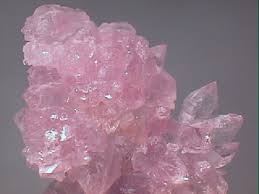
Rose Quartz

A popular gemstone, the pink-hued rose quartz is said to help heal heartaches. Closely associated with love, the rose quartz seems to have a soothing, gentle energy that can calm an agitated wearer. To get the most benefit from a rose quartz, wear the gemstone on a pendant around your neck. This allows the stone to stay close to your heart and help close emotional wounds, promote self-love, and keep your heart open to positive relationships. A gift of a rose quartz can be a wonderful message to someone going though a divorce, breakup, family estrangement, or any struggle with loneliness and lack of inner peace.
Rose Quartz Stone
Rose Quartz

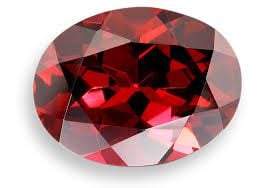
Garnet

The gorgeous, deep shades of red in the garnet are said to energize wearers, which could help them deal with health issues. Wear garnet to give your whole system a boost, revitalize your body, and promote your emotional well-being by boosting your confidence. The stone is also said to bring protection from evil and bad karma. Wear your garnet anywhere, but near the heart is said to be optimal.
Garnet
Garnet

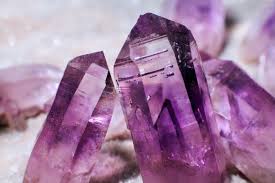
Amethyst

A gorgeous purple gemstone, the amethyst is said to bring strength, courage, and peace to the wearer. These benefits can help promote healing. It’s a soothing stone with peaceful properties, with a quiet energy that should also help release creativity. Since the stone has such tranquil qualities, it’s a great gift for anyone suffering from anxiety, mood disorders, and addictions. Wear it anywhere to promote spiritual and physical health.
Amethyst
Amethyst

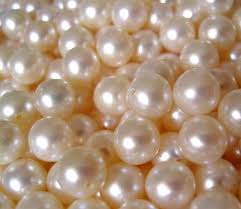
Pearl

A beautiful pearl occurs naturally inside an oyster and can come in many shades, shapes, and sizes. Pearls are said to balance the entire body and create positive, happy feelings within the wearer. In traditional Asian medicinal systems, pearls have been used for treating ailing digestive systems, fertility issues, and heart problems. Today, pearl powder is used in makeup to achieve a glowing complexion. Some people believe it can also be used to treat many skin disorders such as rosacea.
Pearls
Pearls

Moonstone

The hauntingly beautiful, white, clear, or rainbow colored moonstone is said to help wearers achieve balance, particularly females. Since ancient times, travelers have used this gemstone as a protective talisman. Moonstone jewelry has been used to alleviate anxiety, depression, insomnia, and to promote creativity. Some believe this gemstone can also help combat the ailments of both old age and childhood.
Moonstone
Moonstone

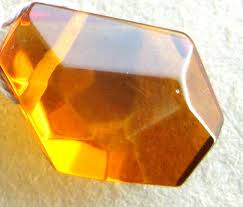
Amber

Yellow, brown, or red colored amber is believed by some to be a powerful gemstone with uses ranging from treating headaches and stress to promoting self-expression. It’s also said to promote cleansing and purification, which may help to bring illnesses out of the body and alleviate pain so that the wearer can heal.
Amber
Amber

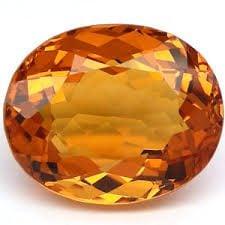
Citrine

Citrine is said to promote emotional well-being and increase positive energy. Some believe it can help with hearing difficulties, digestive ailments, sleep problems, and pain and inflammation management. Wear citrine in its natural form if at all possible to enhance its positive benefits.
Citrine
Citrine

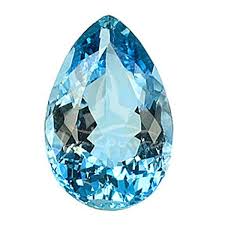
Aquamarine

The color of the ocean, glittering aquamarine is one of the most beautiful gemstones you can buy. There are many traditional beliefs connected to this gem. Aquamarine has been said to help with digestive, eye, and teeth problems. In the past, sailors often used aquamarines to bring them luck at sea. Some still use the stone today for protection purposes. The stone is said to be a positive force that can bring happiness to its wearer and help cope with the grieving process. Some people believe the aquamarine promotes healing energy, reduces the fear of water, and can even bring a wayward lover back. Some shamans use it as a meditative stone.
Aquamarine
Aquamarine

Twisted pair

A traditional landline telephone system, also known as plain old telephone service (POTS), commonly carries both control and audio signals on the same twisted pair (C in diagram) of insulated wires, the telephone line. The control and signaling equipment consists of three components, the ringer, the hookswitch, and a dial. The ringer, or beeper, light or other device , alerts the user to incoming calls. The hookswitch signals to the central office that the user has picked up the handset to either answer a call or initiate a call. A dial, if present, is used by the subscriber to transmit a telephone number to the central office when initiating a call. Until the 1960s dials used almost exclusively the rotary technology, which was replaced by dual-tone multi-frequency signaling (DTMF) with pushbutton telephones
The landline telephone contains a switchhook  and an alerting device, usually a ringer , that remains connected to the phone line whenever the phone is "on hook" (i.e. the switch  is open), and other components which are connected when the phone is "off hook". The off-hook components include a transmitter (microphone), a receiver (speaker), and other circuits for dialing, filtering , and amplification.
A calling party wishing to speak to another party will pick up the telephone's handset, thereby operating a lever which closes the switchhook , which powers the telephone by connecting the transmitter (microphone), receiver (speaker), and related audio components to the line. The off-hook circuitry has a low resistance (less than 300 ohms) which causes a direct current (DC), which comes down the line (C) from the telephone exchange. The exchange detects this current, attaches a digit receiver circuit to the line, and sends a dial tone to indicate readiness. On a modern push-button telephone, the caller then presses the number keys to send the telephone number of the called party. The keys control a tone generator circuit (not shown) that makes DTMF tones that the exchange receives. A rotary-dial telephone uses pulse dialing, sending electrical pulses, that the exchange can count to get the telephone number (as of 2010 many exchanges were still equipped to handle pulse dialing). If the called party's line is available, the exchange sends an intermittent ringing signal (about 75 volts alternating current (AC) in North America and UK and 60 volts in Germany) to alert the called party to an incoming call. If the called party's line is in use, the exchange returns a busy signal to the calling party. However, if the called party's line is in use but has call waiting installed, the exchange sends an intermittent audible tone to the called party to indicate an incoming call.
The ringer of a telephone  is connected to the line through a capacitor , which blocks direct current but passes the alternating current of the ringing signal. The telephone draws no current when it is on hook, while a DC voltage is continually applied to the line. Exchange circuitry (D2) can send an AC current down the line to activate the ringer and announce an incoming call. When there is no automatic exchange, telephones have hand-cranked magnetos to generate a ringing voltage back to the exchange or any other telephone on the same line. When a landline telephone is inactive (on hook), the circuitry at the telephone exchange detects the absence of direct current to indicate that the line is not in use. When a party initiates a call to this line, the exchange sends the ringing signal. When the called party picks up the handset, they actuate a double-circuit switchhook (not shown) which may simultaneously disconnects the alerting device and connects the audio circuitry to the line. This, in turn, draws direct current through the line, confirming that the called phone is now active. The exchange circuitry turns off the ring signal, and both telephones are now active and connected through the exchange. The parties may now converse as long as both phones remain off hook. When a party hangs up, placing the handset back on the cradle or hook, direct current ceases in that line, signaling the exchange to disconnect the call.
Calls to parties beyond the local exchange are carried over trunk lines which establish connections between exchanges. In modern telephone networks, fiber-optic cable and digital technology are often employed in such connections. Satellite technology may be used for communication over very long distances.
In most landline telephones, the transmitter and receiver (microphone and speaker) are located in the handset, although in a speakerphone these components may be located in the base or in a separate enclosure. Powered by the line, the microphone (A2) produces a modulated electric current which varies its frequency and amplitude in response to the sound waves arriving at its diaphragm. The resulting current is transmitted along the telephone line to the local exchange then on to the other phone (via the local exchange or via a larger network), where it passes through the coil of the receiver (A3). The varying current in the coil produces a corresponding movement of the receiver's diaphragm, reproducing the original sound waves present at the transmitter.
Along with the microphone and speaker, additional circuitry is incorporated to prevent the incoming speaker signal and the outgoing microphone signal from interfering with each other. This is accomplished through a hybrid coil . The incoming audio signal passes through a resistor  and the primary winding of the coil  which passes it to the speaker . Since the current path A8 – A3 has a far lower impedance than the microphone , virtually all of the incoming signal passes through it and bypasses the microphone.
At the same time the DC voltage across the line causes a DC current which is split between the resistor-coil  branch and the microphone-coil  branch. The DC current through the resistor-coil branch has no effect on the incoming audio signal. But the DC current passing through the microphone is turned into AC current (in response to voice sounds) which then passes through only the upper branch of the coil's  primary winding, which has far fewer turns than the lower primary winding. This causes a small portion of the microphone output to be fed back to the speaker, while the rest of the AC current goes out through the phone line.
A lineman's handset is a telephone designed for testing the telephone network, and may be attached directly to aerial lines and other infrastructure components